
Storytelling: The Most Compelling Way to Get Someone to Listen to You
Those outside your industry aren’t persuaded by your technical expertise. Not really. They care about what it does for their life.
If a deck-builder says, "We build backyard decks with high-end materials that are protected in the elements and won't warp over time." That's a fact. It's also forgettable.
Or he can say, "I started this business because growing up, our back deck is where we ate dinner as a family every night. I learned how a well-built space brings the people you love together for the moments that matter."
Same builder. Same deck. But now you're not buying materials and labor, you're buying dinner with your kids for the next twenty years. That’s the difference between a fact and a story, and it’s the difference of being remembered and forgotten.
I learned this lesson by accident, on a train to Denver, with a camera I didn't know how to use.
The trip.
June 2017. My family was headed out west for five weeks, one last big trip before everyone scattered. It made sense. My oldest sister eventually moved to Germany with her husband and two kids. My younger sister launched her career in Chicago. My brother is leaving for the University of Virginia. My mom saw it coming before any of us did. "Let's take a big trip before everyone leaves me," is roughly how she put it.
Having no idea what I was doing, I brought her old Canon camera and some lenses.
At the time I was an athlete, full stop. Baseball since I was five. Football through high school. I'd tried track, swimming, basketball, tennis, wrestling, even backyard cricket. I was studying to become an athletic trainer, on a path toward a doctorate in physical therapy, because if I couldn't play forever, I wanted to stay close to the game.
A friend of mine started making videos our senior year. I thought it looked cool. We even shot something with our friends. I wasn’t editing, but I watched while he worked. And something about it fascinated me.
So I got on the train to Denver freshly committed to a college baseball program, camera in hand, and gave myself a challenge: shoot a vlog for each of the five weeks we'd be gone. Looking back at how little I actually knew, I have no idea how I pulled it off. But I did. Five videos, still sitting private on YouTube almost a decade later.
I ended up making 9 videos from that trip.
The turn.
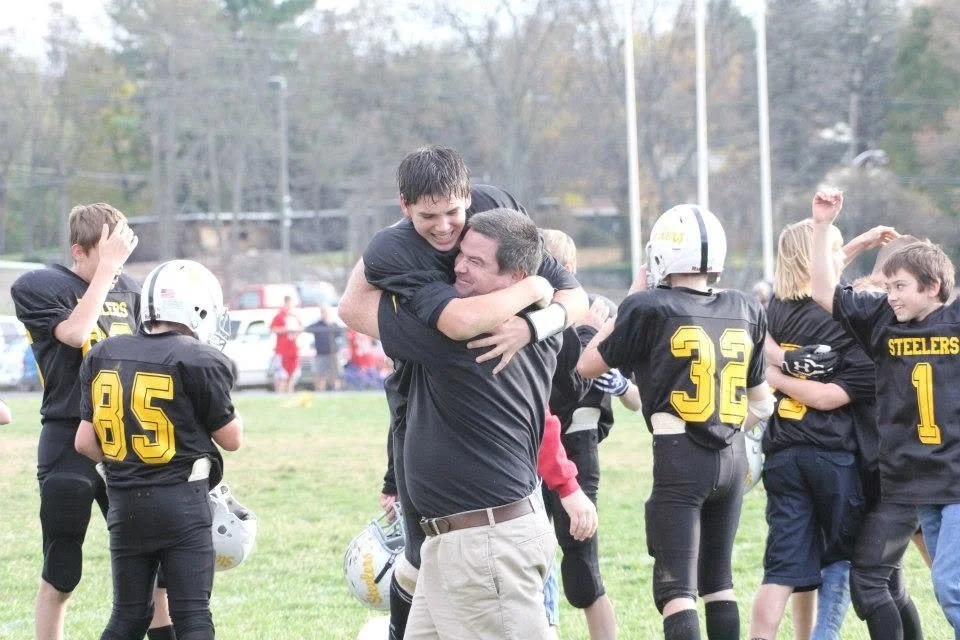
Fast forward to my sophomore year of college. Fall baseball season had just ended, and I sat down with my coaches to tell them I was hanging up my cleats. It was a hard conversation, but it was an easy decision to make. Somewhere between that trip and that season, my love for making videos had quietly outgrown my love for the game.
Since 2017, my family still pulls up those five videos from our trip. We watch them together. We laugh at how much younger everyone looks. We've cried over them more than once.
Looking back, I cringe. The work was rough. They kinda looked… terrible.
But nobody in my family remembers how smooth my transition were. They remember how it felt to watch us on that trip again.
That's when it clicked. A camera doesn't just capture a moment. It hands someone your perspective and lets them feel something they weren't there for.
Pride, joy, grief, vulnerability, an argument, an inside joke. Every movie ever made is really just someone's worldview, packaged so other people can feel it too.
I got obsessed with that idea, and eventually I monetized it, but not because I saw a payday. I saw an opportunity to spend my life on something I was already in love with.
In 2023, after getting let go from an agency job alongside a good friend (ask Stevie, he'll tell you the real story), I moved to Atlanta and started Merrill Film Group. Now I get to help other people tell stories that might otherwise go untold.

The business.
Storytelling works because it draws people in before it asks anything of them. And story consistently outperforms facts, especially on social media. If what you're selling feels technical, dry, or hard to make interesting, the fix usually isn't a better feature list. It's a better story.
Go back to the deck builder. Nobody outside the construction industry connects with materials and warp resistance. But everyone understands wanting a space where their family gathers.
When you frame your offer around something your audience already feels, they buy into the outcome, not the technicality. That's true whether you're running a multi-billion-dollar company or a one-person shop out of a garage.
This is why my clients don't just hire Merrill Film Group for video production. They know the story behind how I got here. They know the passion behind the work. They're not buying a service. They're buying into a brand and a process they trust.
So stop leading with the technical pitch. Start leading with the story. That's where brands actually win.