
What Is Video Marketing? A Practical Guide for Service-Based Businesses
INTRODUCTION
If you have ever said "we tried video and it did not work," you are not alone. That is one of the most common things I hear from new prospects before we start working together. But more often than not, the video was not the problem. The strategy was.
Video marketing is one of the most misunderstood tools in the modern business landscape. Some companies spend thousands on production and see nothing in return. Others dismiss it entirely because they do not see how it applies to their industry. And a growing number have handed it off to a large marketing agency, only to end up with generic content managed by someone who has never spoken to their clients or spent time learning their brand.
This guide is a straightforward breakdown of what video marketing actually is, how it works for service-based businesses, and why strategy, not production quality alone, is what separates video that converts from video that collects dust.
WHAT IS VIDEO MARKETING?
Video marketing is the use of video content to promote, educate, build trust, and drive results for a business. It goes beyond uploading a video to social media. Done correctly, video marketing is a system, one where every piece of content has a purpose, a placement, and a role in moving a potential client from stranger to paying customer.
For service-based businesses, video marketing serves several functions: building brand awareness, establishing authority, converting warm leads, and streamlining internal operations. The businesses that see the most return from video are not necessarily the ones with the biggest budgets. They are the ones with the clearest strategy.
THE MOST COMMON MISCONCEPTIONS ABOUT VIDEO MARKETING
“We tried video and it did not work."
This is the most common thing I hear from business owners before we start working together. When I dig into what happened, the story is usually the same. A video was produced, sometimes a good one, and then it was posted a handful of times, performance was checked, and when immediate results did not materialize, video was written off as ineffective.
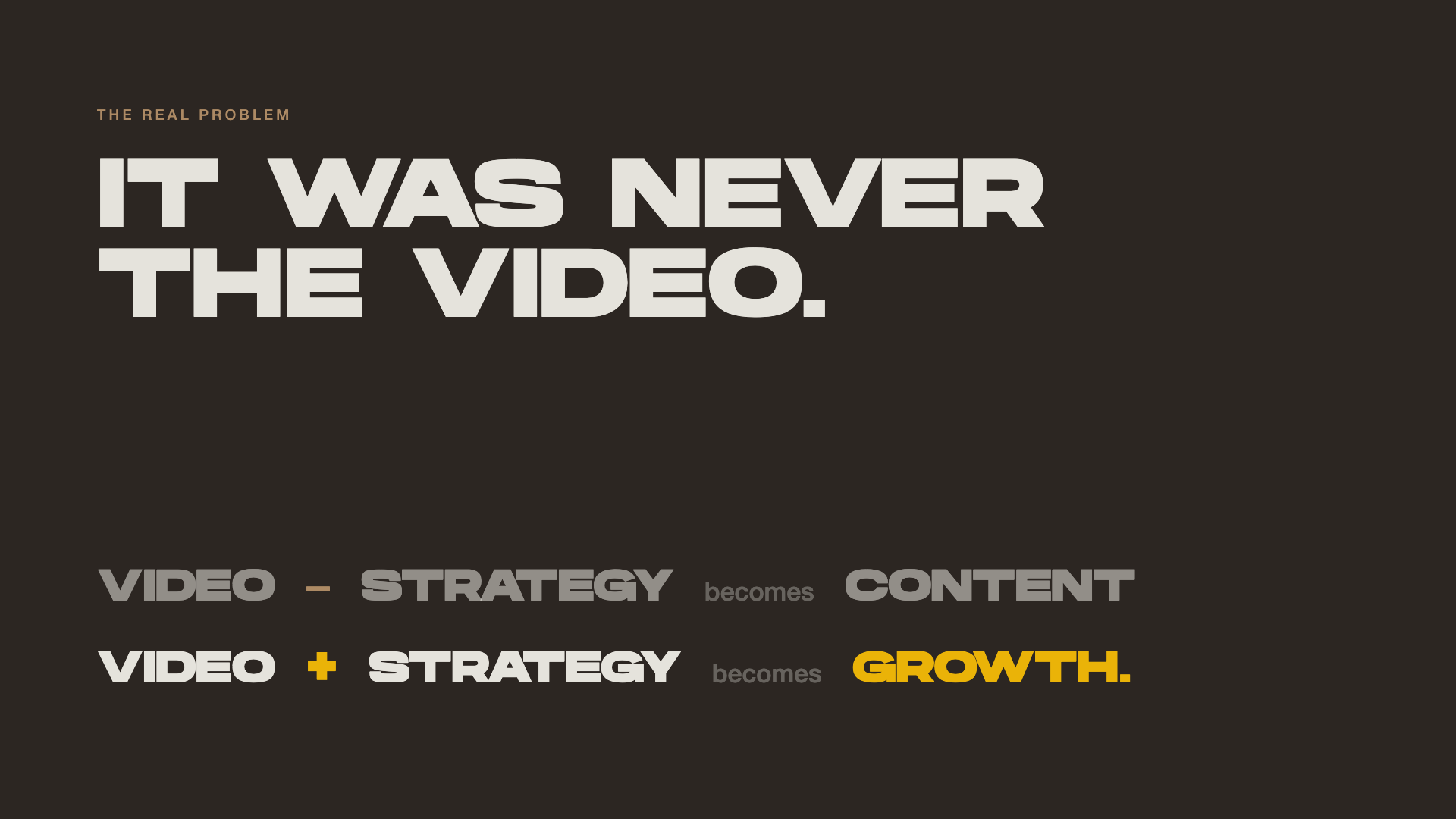
The issue was never the video. It was the absence of a strategy around it.
Video marketing is not a single touchpoint. It is an ongoing presence. One video posted three times on Instagram is not a video marketing strategy. It is a content experiment. A real strategy involves knowing which types of video to create, where to publish them, how often to show up, and how each asset connects to the next step in your sales process.
“I hired a marketing agency and spent a lot of money with no results."
Large agencies can deliver great work. They can also spread attention thin across dozens of accounts while your business gets handed to a junior team member who has never spoken to your clients. The result is generic content that looks polished but communicates nothing specific about who you are or who you serve.
This is one of the reasons boutique firms exist. When you work with a smaller, dedicated team, your account gets real attention. You get people who understand your business, your goals, and your clients, and that specificity shows in the work. You get the quality and resources of a larger agency without the price tag or the lack of personal attention.
“Video does not apply to my business."
It does. The question is how. Video is not only for consumer brands with large social followings. It is for the financial advisor who wants to warm leads before the first meeting. It is for the contractor who wants to win bids by showcasing the quality of their craftsmanship. It is for the nonprofit that needs donors to feel the impact of their giving before they write a check. If your business depends on trust, clarity, or relationships, video is one of the most powerful tools available to you.
VIDEO MARKETING IS NOT JUST AN EXTERNAL TOOL
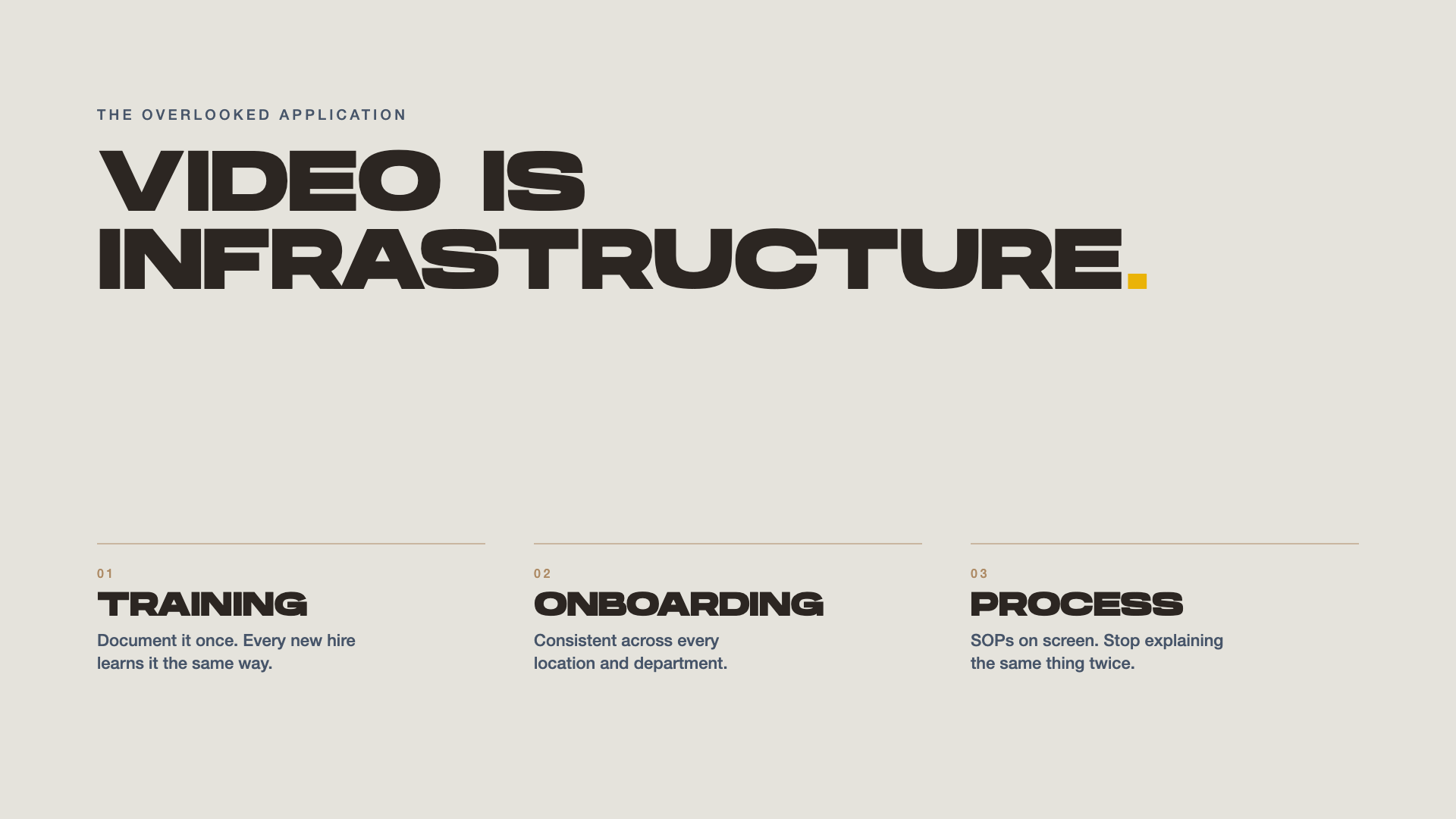
One of the most overlooked applications of video has nothing to do with social media or your website. Video is one of the most effective tools for internal communication, and most businesses are missing it entirely.
Training videos. Onboarding content. Standard operating procedures documented on screen. For businesses with high turnover, growing teams, or complex processes, video solves problems that no employee handbook has ever fully addressed. It reduces repetitive communication, creates consistency across locations and departments, and saves leadership time that would otherwise go toward walking someone through the same process repeatedly.
For businesses with larger teams or multiple locations, internal video is not a nice-to-have. It is infrastructure. And for companies looking to scale, it is one of the most practical investments they can make in their operations.
WHY STRATEGY MATTERS MORE THAN PRODUCTION QUALITY
Production quality matters. Poor audio, shaky footage, and bad lighting undermine credibility. But production quality alone does not make a video marketing strategy work.
The businesses that see consistent results from video treat it as a system rather than an event. They know which types of content to create, they publish consistently, and they have a process in place to maintain that consistency without it falling entirely on internal bandwidth.
For smaller teams and growing businesses, consistency is the hardest part. It is easy to produce a video once. It is much harder to show up every month with fresh, quality content while also running the business. That is where having a dedicated content partner, rather than trying to manage it all internally, changes the outcome.

-
Video marketing is the strategic use of video content to promote a business, build trust with potential clients, and support growth. It includes brand story videos, testimonials, social media content, paid ads, and internal training videos. The key distinction from simply posting videos is that video marketing is built around a strategy with clear goals, consistent execution, and measurable outcomes.
-
Yes, especially for service-based businesses where trust and relationships are central to how clients make decisions. Video allows potential clients to get to know your business before the first conversation, which shortens the sales cycle and improves conversion rates.
-
Posting a video is a single action. Video marketing is a strategy that defines what content to create, where to distribute it, how often to publish, and how each asset connects to your broader business goals. Without strategy, video is content. With strategy, it becomes a system for growth.
-
Costs vary based on scope, content type, and provider. A single brand story video can range from $3,500 to $12,000 or more. Ongoing content packages vary by deliverables. The more useful question for most service businesses is how many new clients it would take to cover that investment, and for most, the answer is one.
CONCLUSION
Video marketing works when it is built around a strategy and executed with consistency. If you have tried video before and did not see results, the problem was most likely not the video itself. It was the absence of a plan behind it.
If you are ready to understand what a video marketing strategy could look like for your specific business, start a conversation with Merrill Film Group. We work with service businesses to build video systems that actually support growth.